

The 4-Step Protocol: Eradicating Bed Bugs and Safeguarding Your Hotel’s Reputation
The discovery of bed bugs in a hotel room is more than a simple maintenance issue; it is a critical incident that tests an operator’s risk management and brand integrity. Rapid, precise, and scientifically justified action is paramount. However, standard residential pest control tactics simply do not apply to the complex, high-traffic environment of a commercial property.
Before delving into the technical eradication steps, it is essential for hotel operators to conduct an internal operational assessment. Successful bed bug management starts with answering three critical questions that often determine the success or failure of any intervention:
- Is your staff currently trained on the precise actions required upon discovering an infestation, or are you relying on outdated procedures that risk spreading the issue throughout the property?
- Do your current standard operating procedures (SOPs) mandate the immediate, proactive inspection of adjacent rooms (above, below, and on both sides), even when no immediate signs are visible in those units?
- Are you aware that the bed bug egg incubation period scientifically mandates a secondary treatment session, and that skipping this step guarantees re-infestation?
For hotels in Singapore, where regulatory compliance and reputation are inextricably linked, adopting a proactive, expert-driven protocol is an investment in long-term stability. The following four-step framework provides a robust, evidence-based roadmap for comprehensive eradication, designed specifically to manage the unique challenges of the hospitality sector.
I. Introduction: The High Stakes of Hospitality Infestation
The Threat Matrix: Reputation, Revenue, and Regulatory Risk

In the competitive global hospitality market, a hotel’s reputation is its most valuable asset, and a bed bug incident can initiate a rapid and costly reputational avalanche. The presence of these tiny pests triggers immediate adverse effects that extend far beyond the inconvenience to the initial guest, including negative online reviews, a sharp decline in guest satisfaction, and potential legal repercussions. For high-traffic Singaporean hotels, where consumer expectations are high, a lapse in pest control can translate almost instantaneously into a loss of booking confidence and subsequent revenue decline.
The financial consequences are also steep. While the substantial economic costs incurred for treatment and professional removal are significant, these fees often represent only the initial financial outlay. The true economic burden is found in the loss of operational capacity—the removal of rooms from inventory for inspection, preparation, treatment, and monitoring. In some high-volume environments, bed bug issues have been documented to result in the loss of access to beds nearly every other day due to necessary quarantine and treatment procedures.
Why Residential Tactics Fail in Commercial Environments
Hotel environments present a unique blend of structural complexity and logistical challenges that amplify infestation risks. The constant, high volume of guest traffic, coupled with the frequent rotation of luggage and personal items, provides continuous opportunities for bed bugs to be introduced. Moreover, the structural layout of hotel rooms – featuring high levels of upholstered furniture, wall-to-wall carpeting, drapes, and complex fixtures—provides vastly more hiding places than a typical residential unit.
This operational reality means that strategies successful in homes are insufficient for hotels. A dedicated commercial strategy is required, one that moves beyond simple, reactive spot treatments to an integrated risk management protocol focused on proactive detection, rapid containment, and guaranteed, multi-room eradication.
II. Step 1: Immediate Containment and Crisis-Proof Guest Relations
The moment a potential bed bug sighting is reported or confirmed, the immediate execution of a disciplined containment strategy is the highest priority. The objective of Step 1 is twofold: to isolate the infestation (Room Zero) and to protect the hotel’s reputation through professional guest handling.
The Protocol: Isolating Room Zero and Preventing Dispersal
Quarantine of the affected room is non-negotiable. Room Zero must be immediately taken out of service, and clear procedures must be put in place to prevent the physical dispersal of bed bugs by staff, guests, or contaminated items. Staff must be educated on precise procedures, which include strictly sealing all linens, drapes, and potentially contaminated guest items (if provided) in labeled plastic bags before removal for industrial high-heat washing or dry-cleaning.
A fundamental aspect of containment training is the strict prohibition of untrained staff using over-the-counter pesticides. Experience shows that these amateur actions rarely kill the insects and often have the highly damaging effect of causing immediate and unnecessary dispersal. Pest management professionals (PMPs) routinely observe bed bugs moving into adjacent, previously uninfested rooms precisely because the indiscriminate use of disruptive chemical interventions scatters the insects into wall voids and utility lines as they flee the toxic cloud. Effective containment relies entirely on non-dispersive actions and immediate professional consultation.
Protecting Your Brand: The Art of Professional Guest Handling
The second component of containment is protecting the hotel’s brand through professional crisis communication. Guests who discover bed bugs are likely to be distressed and anxious, posing an immediate threat to the hotel’s online reputation. Open, informed communication is key to mitigating this risk. Staff should reassure the guest that bed bugs are not known to cause disease and that the hotel is taking immediate, expert action to address the situation. This communication transparency helps remove the stigma often associated with bed bug incidents.
To minimize the likelihood of negative reviews, legal action, or publicizing the incident, standard protocol includes professional loss mitigation measures. Depending on the severity of the guest’s distress, the hotel should offer to wash or dry-clean the guest’s clothes, inspect or steam-treat their luggage, and, where appropriate, financially compensate the room stay. By controlling the guest experience with empathy and professionalism, the hotel transforms a potential disaster into a managed resolution, demonstrating operational maturity specific to the hospitality sector.
III. Step 2: Comprehensive Inspection and Primary, Targeted Treatment
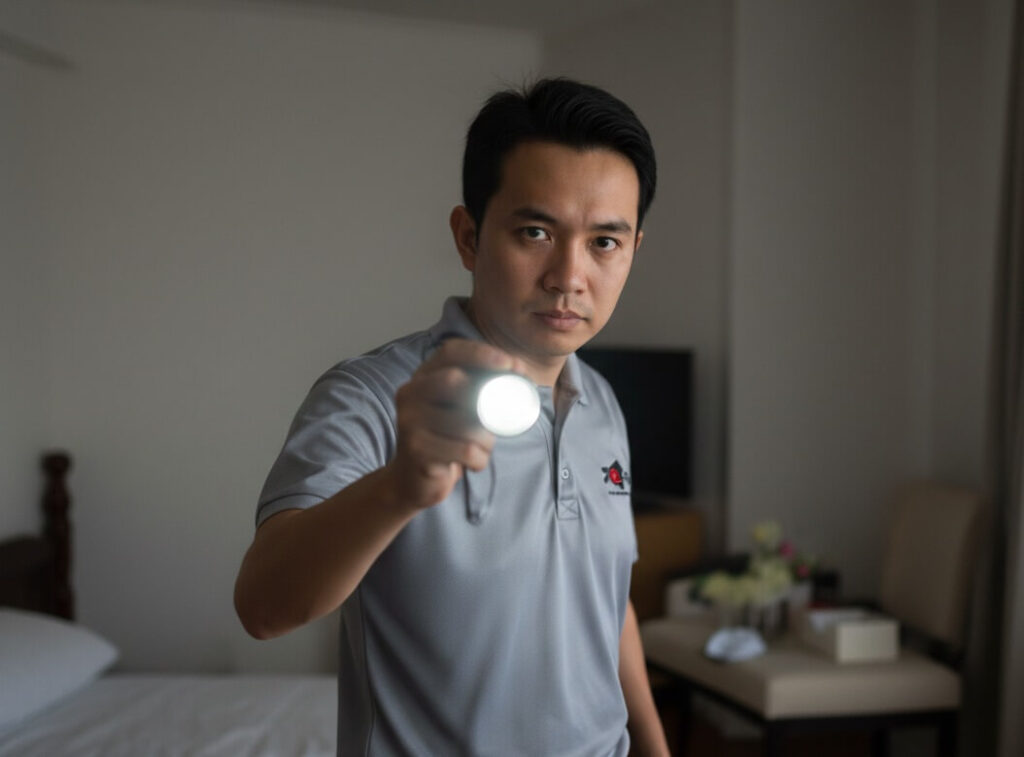
Once containment is established, the focus shifts to meticulous, expert-level inspection and the primary treatment application. The structural complexity of hotel rooms necessitates a far deeper and more time-intensive process than typically required in a residential setting.
The Hotel Hiding Ground Problem: Inspection Complexity
The primary challenge in commercial inspection is the sheer volume of potential harborages. Hotel rooms contain numerous fixtures, extensive floor coverings, and upholstered items that serve as excellent hiding spots for bed bugs. The inspection must be meticulous, requiring experts trained to search beyond the obvious mattress seams.
Critical inspection areas include:
- The Bedding Complex: Mattress seams, box springs, headboards, and the walls adjacent to them, as well as every layer of linens, dust ruffles, and pillows.
- Furniture and Fixtures: The interior, underside, and backing of nightstands, dressers, and all upholstered furniture (chairs, sofas).
- Structural and Décor Elements: Behind all wall décor (pictures, mirrors), baseboards, electrical outlets, carpeting, rugs, and drapes.
This detailed level of inspection requires a pest management partner who understands that high foot and luggage traffic patterns often dictate where these harborages are located, ensuring every possible crack and crevice is examined before any treatment commences.
Advanced Treatment: Using the Right Product
Generic or broadcast insecticide spraying is generally ineffective in complex commercial settings because it often fails to reach the insects hidden deep within the structure of furniture or wall voids. Treatment must be targeted, safe, and specifically calibrated for hospitality environments. The use of non-human sensitive products are crucial to prevent allergic reaction and harm to the next guests, while effectively eliminating the bed bugs.
For the safety of our clients, A-Flick prioritizes the use of organic products from plant extracts in our bed bug eradication program.
IV. Step 3: The Science of Eradication – Why You Must Treat Again
The necessity of scheduling a second treatment is perhaps the most critical difference between an amateur attempt and a guaranteed professional eradication protocol. This requirement is driven not by preference, but by the immutable biology of the bed bug.
Bed Bug Biology 101: The Mandatory Retreatment Window

Conventional insecticide treatments are designed to be highly lethal to adult bed bugs and nymphs, but they are significantly less effective, and often entirely ineffective, against the bed bug egg stage. The resilience of the eggs means that even if the initial treatment kills 100% of the live, visible population, the problem will recur unless the eggs are addressed.
Bed bug eggs are small, white, and sticky, and are laid securely into cracks and crevices. They hatch relatively quickly, typically requiring only 6 to 10 days from being laid to produce newly hatched nymphs. These nymphs, or first instars, immediately seek a blood meal and begin the developmental cycle toward reproduction.
The critical follow-up timeline is derived directly from this biological imperative. To achieve complete eradication, a secondary treatment must be applied after the initial application has killed the adult population, but before the newly hatched nymphs mature enough to reproduce and lay a new generation of eggs. This scientifically mandates a 7-to-10 day post-initial treatment timeline to effectively target the newly emerged population while they are still vulnerable. Skipping this secondary treatment ensures that the next generation will emerge and the infestation will immediately restart, undermining all prior efforts and incurring greater long-term costs.
The Complete Eradication Timeline
While the initial knockdown and mandatory follow-up are critical steps, the full eradication process—including initial detailed inspection, primary treatment, the follow-up treatment, and post-treatment monitoring—typically requires professional engagement lasting between 2 and 6 weeks, depending heavily on the severity of the initial infestation and the treatment method employed. The process culminates in rigorous follow-up monitoring, often involving inspections every few weeks for a period, to ensure full eradication and verify that the room can be safely returned to service.
V. Step 4: The Research-Backed Dispersal Strategy – Inspecting Adjacent Rooms

Ignoring the rooms surrounding the infested unit (Room Zero) represents the single largest operational failure point in hotel bed bug management. Bed bugs are not only introduced by human travelers; they are highly mobile creatures capable of moving through wall voids, utility access points, and shared structural elements to adjacent units. A comprehensive protocol must account for this migration risk.
Defining the Mandatory Inspection Perimeter
Based on the known bed bug dispersal behaviors, the professional protocol requires immediate inspection not only of the affected room but also of all adjacent units: the room to the immediate left, the room to the immediate right, the room directly above, the room directly below, and the opposite room. This minimum five-room inspection perimeter ensures that any satellites of the infestation are identified and treated before they have a chance to establish themselves or spread further. A failure to address this adjacent infestation risk renders all eradication efforts in Room Zero temporary, leading to immediate recurrence, negative guest experiences, and compounding financial losses.
VI. Mastering Hotel-Specific Logistical Challenges
The technical four-step protocol is only as effective as the operational environment allows. Successful, sustained bed bug management in the hospitality sector requires addressing unique logistical and human resource challenges that are often overlooked in standard pest control services.
The Staffing Challenge Treadmill
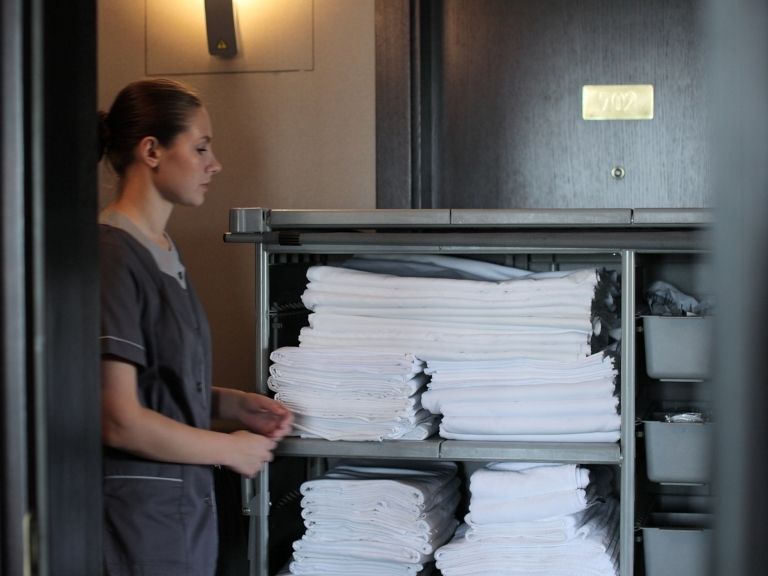
A pervasive issue across the hospitality industry is the difficulty in maintaining consistent staff training due to high turnover rates. Studies indicate that nine out of ten hotels face bed bug-related staffing challenges, primarily revolving around the difficulty of keeping staff consistently trained, prioritizing ongoing staff inspection practices, and coordinating effective training efforts.
Hotel management often uses internal staff to conduct initial bed bug inspections. If these internal teams are not properly educated, they may inadvertently misidentify the problem, delay reporting, or, worst of all, take actions that cause the infestation to spread, such as using aerosol spray.
A truly effective, proactive program must be designed to overcome these human resource hurdles. This requires the pest management partner to provide consistent, formalized staff education, including the deployment of standardized factsheets and checklists, to transform housekeeping and maintenance staff into a trained first line of defense.
The PMP must also establish standardized, integrated inspection schedules, differentiating between weekly checks (often internal staff) and comprehensive monthly or quarterly inspections (conducted by the professional provider). This integrated strategy ensures detection consistency regardless of staff fluctuation.
Proactive Programs: Shifting from Reactive Response
The most expensive way to manage a pest issue is to wait for the system to break, that is, waiting for a guest complaint (reactive mode) before taking action. Reactive responses guarantee lost revenue (comped rooms, negative reviews) and maximize the treatment area due to unchecked dispersal.
Proactive bed bug management involves shifting the paradigm to regular, scheduled inspections, typically conducted monthly or quarterly by the PMP. This strategic investment aims to catch low-level infestations during the initial introduction phase, long before they can escalate, establish harborages, or become high-dispersal crisis.
The Financial Justification: Reputation vs. Remediation
Ultimately, hotel management must view the integrated four-step protocol as a critical business defense tool. The true calculation involves weighing the direct and immediate cost of comprehensive remediation (PMP fees, multi-room inspection costs, and room downtime) against the massive, long-term costs associated with negative reputation, potential legal actions and regulatory fines.
An integrated, expert-managed protocol is fundamentally an investment in brand stability, operational continuity, and regulatory compliance. It provides the structured, evidence-based approach necessary to guarantee that once bed bugs are discovered, they are eliminated completely—biologically, structurally, and operationally—minimizing the financial footprint and preserving the hotel’s reputation.
VII. Conclusion and The A-Flick Commercial Solution
For hotel operators in Singapore, a bed bug infestation demands a specialized, evidence-based response that residential methods cannot provide. A commitment to expert protocol is a commitment to regulatory compliance and brand protection.
A-Flick adheres strictly to protocols that are scientifically and statistically mandated, including the non-negotiable 7-to-10 day retreatment timeline based on bed bug egg biology and the proactive inspection of adjacent units. This comprehensive approach ensures prompt elimination of the bed bug infestation.

Schedule Your Meticulous, Research-Backed Inspection Now and Protect Your Brand
Don’t wait for a guest complaint to spiral into a public reputational disaster or a regulatory sanction. Early detection and immediate, structured intervention are the only viable path to mitigating risk and reducing downtime.
Our B2B experts are ready to implement the A-Flick 4-step protocol, safeguard your rooms, and ensure operational continuity.
Contact A-Flick Today for a Free Commercial Quote.