

Too Many Legs? How to Get Rid of Millipedes in Your Singapore Garden
Let’s be honest. One or two legs? Fine. Four legs? Cute, if it’s a cat. But anything with more legs than a football team is where most homeowners draw the line.
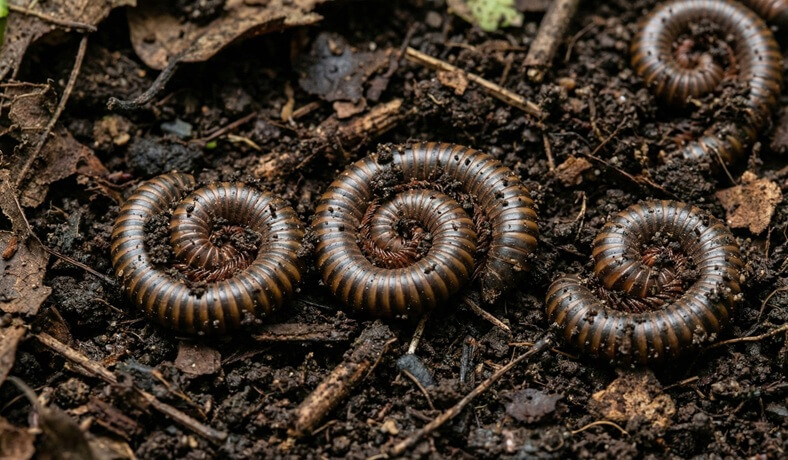
If you live in a landed property in Singapore, you might have woken up recently to find your porch, driveway, or even your living room floor covered in slow-moving, coiling worms. Those aren’t earthworms. They are millipedes, and while they don’t bite or sting, the “ick” factor of crunching one under your slipper is very real.
At A-Flick, we have seen a surge in calls from homeowners asking about millipede pest control. Before you grab that can of aerosol spray (spoiler: it won’t work well), let’s look at what you are actually dealing with and how to handle it effectively.
Meet Your Uninvited Guests
In Singapore, you are likely encountering one of two main culprits.
The first is the Rusty Millipede (Trigoniulus corallinus). These are the reddish-brown ones you often see curling into a tight spiral when you poke them. They are detritivores, meaning they love eating decaying leaves and wood.
The second, and often more annoying visitor, is the Yellow-Spotted Millipede (Anoplodesmus saussurii). According to researchers at the Lee Kong Chian Natural History Museum, this species is known for “mass invasions” in Singapore, often aggregating in huge numbers on concrete paths, drains, and walls. They are black with distinctive yellow patches and are highly visible against our light-colored floor tiles.
Why Are They Suddenly Everywhere?
You didn’t invite them, so why did they show up? The answer usually lies in the weather.
Millipedes breathe through spiracles (tiny holes) on their body. When we get those heavy Singapore downpours, the soil becomes saturated. To avoid drowning, millipedes migrate out of the ground and seek higher, drier ground. Unfortunately, “higher ground” often means your patio, your kitchen, or your garage.
Conversely, during hot dry spells, they might enter your home seeking moisture because the soil has become too dry. As noted by the North Carolina State Extension, this migration is purely for survival; they aren’t trying to attack you, they are just trying to stay alive.
The Problem with DIY Solutions
Most homeowners react to a garden millipede infestation by spraying standard aerosol insecticides directly on the worms. This is rarely effective for two reasons:
- The Armor: Millipedes have a hard, calcified exoskeleton that protects them from light sprays.
- The Numbers: For every one you see, there are likely dozens more hidden in the soil or mulch beds just outside your door.

How to Get Rid of Millipedes: The Do’s and Don’ts
If you want to keep your home millipede-free, you need to focus on their habitat, not just the individual worm.
1. Don’t Over-Mulch Mulch is great for plants but it is a luxury hotel for millipedes. It holds moisture and provides food. Keep mulch layers thin (less than 2 inches) and try to keep it 6 to 12 inches away from your home’s foundation.
2. Do Seal Your Entry Points Millipedes can squeeze through tiny gaps. Install door sweeps on your external doors and seal cracks in your sliding door tracks. This process, known as “exclusion,” is your first line of defense.
3. Do Manage Moisture Ensure your gutters are not overflowing and that water drains away from your house. If your garden is constantly damp, you are inviting a colony to move in.

The A-Flick Solution
Sometimes, sweeping them up isn’t enough. If you are facing a relentless invasion, you need professional intervention.
At A-Flick, we tackle getting rid of millipedes differently than general pests like ants or cockroaches. Because they burrow, surface sprays often miss the mark.
- Granular Treatment: We utilize specialized granular insecticides that penetrate the soil and thatch layers where millipedes breed and hide.
- Perimeter Defence: We create a treated barrier around your home’s exterior to stop the migration before they reach your door.
- Exclusion Advice: Our technicians will identify the specific cracks and gaps in your property that are letting them in.
Ready to reclaim your floor?
Don’t let the invasion takeover your patio. If you are tired of the daily sweep-up, let the experts handle it. Book a site inspection with A-Flick today!