
The “High-Rise” Myth: Why Living on the 12th Floor Won’t Save You from Termites
If you live in an HDB or a condo, you probably assume you are safe. You rely on the Pre-Construction Soil Treatment done before the building was built, and you see the fogging crews working around the void deck every week.
But here is the uncomfortable truth: Termites don’t respect the “Common Area” boundary.
While the Town Council or Condo Management (MCST) diligently protects the shared spaces, their jurisdiction—and their liability—usually stops at your front door. If termites migrate from the common lift lobby into your living room, the damage inside is 99% your bill.
How Do Termites Reach the 20th Floor?
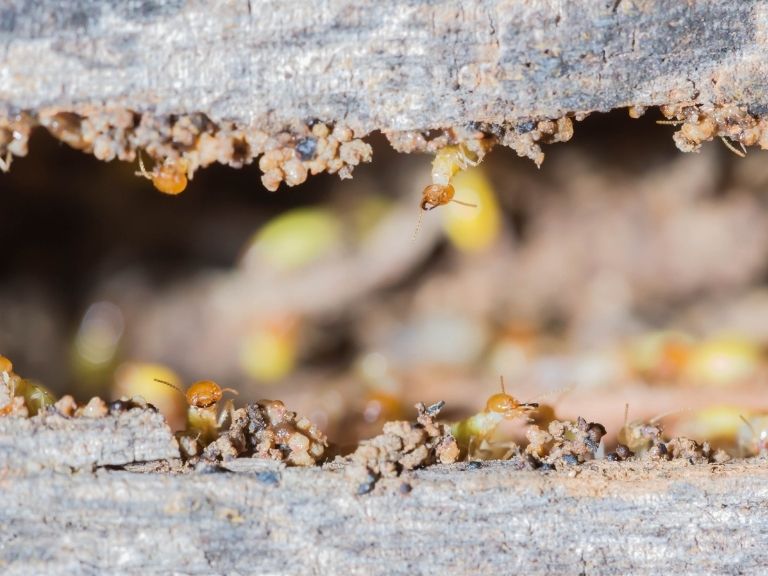
It defies logic, right? Termites live in the soil. How do they get to a high-rise unit?
They use the building’s own infrastructure as a “Superhighway.”
1. The “Vertical Highway” (Risers and Shafts). The Choa Chu Kang case is a perfect example. Electrical risers, water pipes, and refuse chutes run continuously from the ground to the roof. These dark, humid shafts are perfect protected tunnels for termites to travel upwards, bypassing the concrete floors entirely. They can exit at any level—whether it is the 2nd floor or the 25th.
2. The “Air Raid” (Alates). Have you ever seen those swarms of flying insects around your corridor lights after rain? Those are Alates—termite princes and princesses looking to start a new colony. They are weak flyers, but updrafts can carry them to high floors. If you have soil-filled planter boxes on your balcony or a roof garden above you, these act as “satellite ground.” Alates can land here, find the moisture they need, and start a colony that attacks your home from the balcony inwards.
3. The “Trojan Horse”. Termites can also be carried in. Furniture can harbor a silent infestation. Luckily, they don’t spread.
The “Management Gap”: Who Pays for What?
This is where the heartache happens.
- Town Council/Management: Responsible for the Common Property (Corridors, risers, void decks).
- You (The Homeowner): Responsible for the Strata Lot (Everything inside your four walls).
If you spot termites on the common corridor, the Town Council will treat it. But if those termites have already eaten your $8,000 shoe cabinet inside, the council is generally not liable for your furniture.
This is exactly what happened to local actor Joshua Tan, who reportedly spent a fortune overhauling his luxury condo (ground floor in his case) after a termite infestation destroyed his parquet flooring and carpentry.
What High-Rise Homeowners Must Do
Since you cannot rely on the building’s perimeter alone, you need to secure your unit’s perimeter.
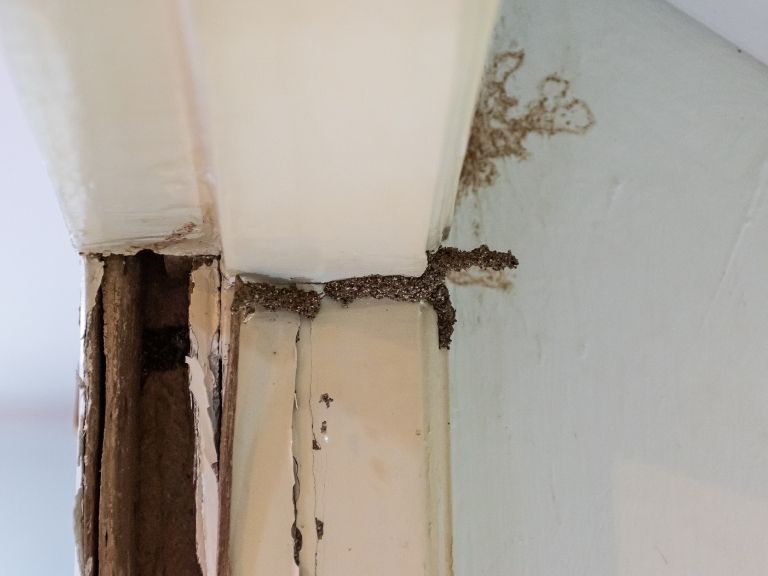
1. Declutter “Dead Zones” (Visibility is Key). Termites thrive in dark, undisturbed areas. In high-rise apartments, the “danger zones” are often the storeroom (bomb shelter) or the back of deep cabinets that haven’t been opened in months. Don’t stack cardboard boxes or old newspapers directly against the wall. Leave a small gap between your storage and the wall. This lets light in and makes it much easier to spot those tell-tale mud tubes early, rather than discovering them only when you move out.
2. Pay attention to the “Hotspots” (Door Frames & Parquet). In high-rise units, termites often enter via the bathroom or kitchen pipe shafts and attack the nearest wood first. Pay attention to your bathroom door frames and parquet flooring regularly. If you see “blistering” paint, wood that looks swollen (often mistaken for water rot), or dark patches spreading on your wooden floor, do not just sand it down. These are the classic first signs of a termite invasion.
3. Get a “Strata-Specific” Inspection. Don’t wait for the Town Council to put up a notice. If you are doing a renovation, ask A-Flick to perform a pre-renovation scan. We can treat the raw concrete before you install that expensive carpentry and built-in cabinets, giving your unit its own independent layer of protection.

Protect Your Renovation Investment
Your home is likely your biggest asset. Don’t let a “landed property mindset” leave your high-rise apartment exposed.
Not sure if your unit is at risk? A-Flick offers specialized inspections for high-rise units. We check the hidden entry points that general pest control often misses.